

Fractional RevOps That Pays for Itself: Revenue Intelligence and Sales Enablement as One System
Fractional RevOps That Pays for Itself: How Revenue Intelligence and Sales Enablement Combine to Accelerate Growth
As markets evolve, more companies are turning to Fractional Revenue Operations (RevOps) to get faster results without the expense of full-time hires. This article shows how pairing revenue intelligence with sales enablement inside one system produces measurable financial impact. You’ll find clear definitions, sector-specific benefits, and a practical implementation path so sales teams perform better and investments deliver returns.
Key Takeaways
- Fractional RevOps unites revenue intelligence and sales enablement to sharpen growth strategies.
- It offers flexibility and cost-efficiency by accessing specialized RevOps talent on demand.
- Actionable, data-driven insights guide smarter sales decisions and boost team productivity.
- Linking intelligence and enablement creates a single source of truth for better decisions.
- Industries like automation, building management, and security see targeted, measurable gains.
- Inveo’s platform emphasizes analytics, automation, and integrations that make ROI visible.
- Successful rollouts rely on thoughtful integration with existing sales and revenue systems.
- Fractional RevOps scales with your business and adapts as operational needs change.
What Is Fractional RevOps and How Does It Benefit Industrial Clients?
Fractional RevOps is a part-time engagement model where companies hire external RevOps experts to manage and improve revenue operations. It blends sales enablement, revenue intelligence, and operational strategy into a unified approach that drives growth without the cost of permanent hires. For industrial clients, that means access to specialized skills tailored to long, technical sales cycles—without long-term staffing commitments.
Seen strategically, RevOps is an organizational design that aligns commercial teams, standardizes systems, and creates a scalable foundation for growth across markets.
RevOps: Organizational Design for Cross-Functional Integration & Scalable Growth
This thesis examines Revenue Operations as a contemporary organizational model that supports international scaling in high-growth, digital-first companies. Using Galbraith’s Star Model, it shows how RevOps aligns cross-functional commercial teams, standardizes operational infrastructure, and enables coordinated strategy across regions. While widely adopted in practice—especially in software and tech—RevOps remains underexplored in organizational theory.
Revenue Operations as a modern organisational design in enabling international scaling in digital-first firms, 2025
Defining Fractional Revenue Operations Services
Fractional Revenue Operations covers both tactical and strategic work to optimize how revenue is generated. Typical services include sales strategy, performance analytics, process design, and technology integration. Together, these elements streamline lead flow, lift conversion rates, and unlock revenue upside—without adding full-time headcount.
Key Advantages for Automation, Building Management, and Security Sectors
Automation, building management, and security companies benefit strongly from Fractional RevOps because they often face long sales cycles, technical buyer journeys, and the need to coordinate field and commercial teams. Automation vendors use data to improve targeting and pricing. Building managers connect tenant and service data to boost retention and upsell. Security providers allocate resources more precisely by tracking performance metrics. In each case, a unified RevOps approach reduces friction and improves outcomes.
Inveo shows how a single platform can combine revenue intelligence and sales enablement to solve these industry-specific challenges.
How Does Revenue Intelligence Enhance Sales Enablement in One Unified System?

Revenue intelligence gives reps the context they need: who to prioritize, which deals are at risk, and which messages land. When those signals flow into enablement tools, reps get timely coaching, relevant content, and automation that removes manual work—so they spend more time selling and less time searching.
Role of Data-Driven Insights in Improving Sales Performance
Data-driven insights reveal patterns, predict buyer behavior, and focus efforts on high-impact activities. Analytics surface product and segment performance, expose deal friction, and guide coaching priorities. The result is leaner pipelines, higher conversion rates, and stronger customer outcomes.
Integrating Revenue Intelligence Software with Sales Enablement Tools
Real impact requires tight integration: share signals across CRM, enablement, and analytics so workflows stay aligned. Choose compatible systems, automate repetitive tasks, and train teams to use the combined data. That coordination removes silos and turns insight into repeatable actions.
What Features Make Integrated Fractional RevOps Systems Deliver Measurable ROI?
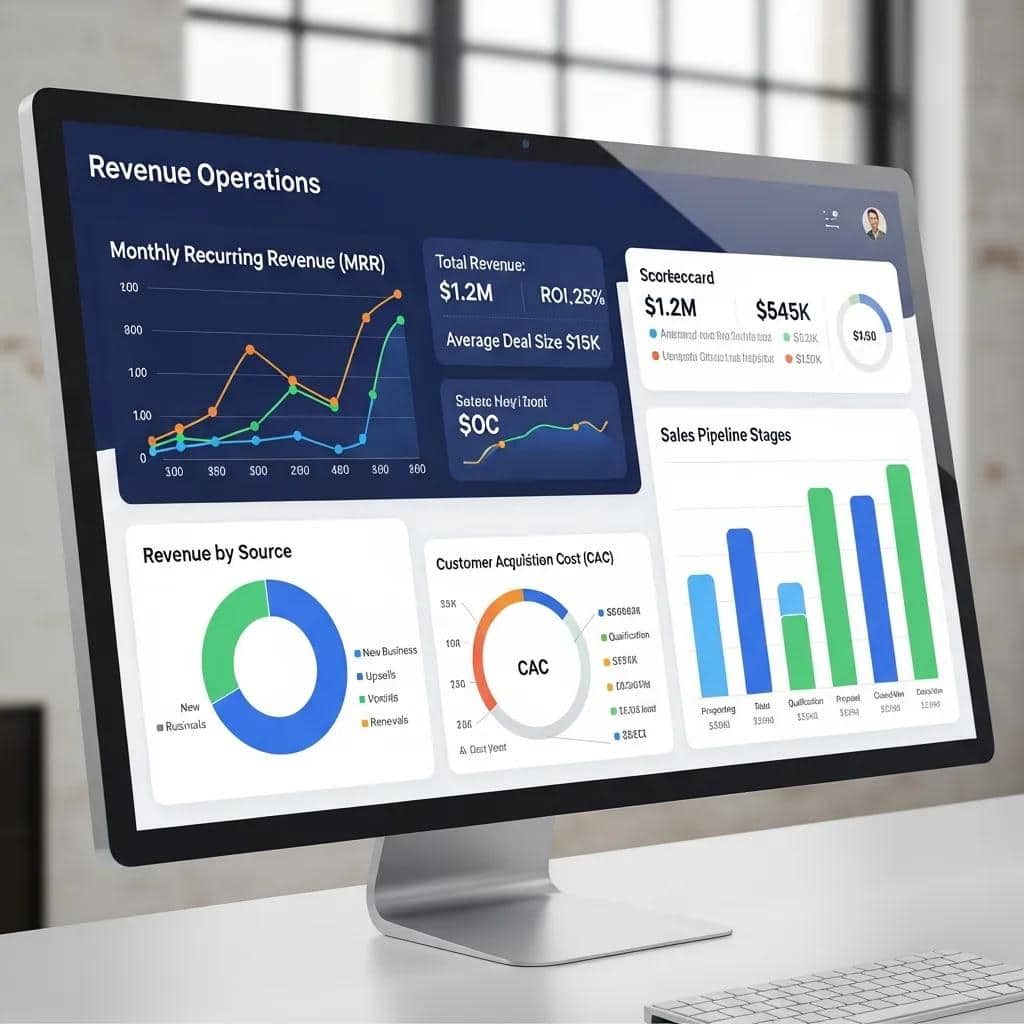
Integrated Fractional RevOps platforms generate ROI by combining analytics, automation, and connectivity so teams can measure impact and scale what works. Clear KPIs, real-time visibility, and workflows that cut manual effort all contribute to measurable gains.
Core Capabilities of Inveo’s Fractional RevOps Platform
Inveo’s platform centers on a few core capabilities that drive results:
- Comprehensive analytics: Deep, actionable visibility into sales performance and customer behavior.
- Automation tools: Eliminates repetitive tasks so reps focus on high-value selling.
- Integration capabilities: Connects smoothly with CRMs, enablement tools, and revenue systems.
Combined, these capabilities improve efficiency, shorten sales cycles, and make ROI transparent.
Case Studies Demonstrating Revenue Growth and Sales Efficiency
Practical examples show the impact. An automation provider saw a 30% improvement in sales efficiency after using Inveo to prioritize deals and allocate resources. A building management firm cut operational costs by 25% after automating routine processes and centralizing data. These outcomes show how integrated RevOps turns insight into measurable gains.
How Can Businesses Seamlessly Implement Fractional RevOps Services?
Rolling out Fractional RevOps is as much change management as it is technical work. A phased approach—assess current systems, prioritize high-impact workflows, and iterate—keeps disruption low and momentum high.
Integration Capabilities with Existing Sales and Revenue Systems
Successful integration starts with mapping your tech stack and data flows, then selecting connectors that preserve data integrity. Plan rigorous testing, define data ownership, and ensure users are trained to trust and use the system.
Best Practices for Aligning Sales Enablement and Revenue Operations
To align teams and realize value quickly, follow these practices:
- Establish clear goals: Agree on KPIs that matter to both sales and RevOps.
- Foster collaboration: Create shared routines—regular health checks, pipeline reviews, and joint planning sessions.
- Leverage technology: Use integrated tools that enable real-time data sharing and automate repetitive tasks.
Following these steps builds a cohesive environment that supports predictable revenue growth.
Frequently Asked Questions
What types of businesses can benefit from Fractional RevOps?
Fractional RevOps fits many companies—particularly tech, manufacturing, and service firms that need flexible, scalable revenue support. Startups, scale-ups, and SMEs use it to access specialized RevOps skills and tooling without the cost of full-time hires.
How does Fractional RevOps differ from traditional RevOps?
Fractional RevOps delivers the same strategic discipline as traditional RevOps but on a flexible engagement model. Instead of hiring full-time staff, businesses work with external experts who deliver targeted outcomes—making it easier to control costs and accelerate value.
What are the key challenges in implementing Fractional RevOps?
Common challenges include resistance to change, integration gaps, and unclear success metrics. Address them by defining objectives, investing in training, and establishing shared ownership between sales and RevOps teams.
How can data privacy be maintained in Fractional RevOps?
Protecting data requires strong governance: encryption, role-based access, vendor assessments, and regular audits. Verify third-party providers meet regulations like GDPR or CCPA, and train staff on secure data handling.
What role does technology play in Fractional RevOps?
Technology is the backbone: analytics platforms, CRMs, and automation tools capture signals and act on them to improve decision-making. The right tech stack converts raw data into repeatable workflows and measurable revenue outcomes.
Can Fractional RevOps be scaled as a business grows?
Yes. Fractional RevOps is designed to scale—engagements can increase, services can expand, and tools can be upgraded as needs evolve. That flexibility makes it a practical fit for growing organizations.
Conclusion
Combining Fractional Revenue Operations with revenue intelligence and sales enablement gives companies a practical, scalable way to improve revenue performance. With clear data, automated workflows, and connected systems, teams make faster decisions and see measurable ROI. Explore how Inveo’s tailored Fractional RevOps services can streamline operations and accelerate your growth.