
AI & Revenue Automation for Revenue Teams: A Practical Guide to Smart Lead Enrichment, Predictive Scoring, and Sales Automation
The landscape for sales and marketing is evolving rapidly. AI and automation are now core capabilities for revenue teams that need to move faster, focus on the right opportunities, and scale predictable growth. This guide explains how intelligent lead enrichment, predictive lead scoring, and sales automation work in practice — and how each tightens processes, improves outreach, and drives revenue. You’ll find clear explanations of the underlying technology, practical industry use cases, and real-world examples showing the return when these tools are applied correctly.
AI’s impact on sales productivity—especially when powered by techniques like natural language processing and reinforcement learning—keeps advancing, rewarding teams that invest in data-driven automation.
AI-Powered Automation for Sales Process Optimization
This paper explores how artificial intelligence (AI), combining natural language processing (NLP) and reinforcement learning (RL), can streamline sales workflows. It reviews how AI-driven automation improves customer interactions, uncovers actionable insights, and optimizes steps across the sales cycle.
Enhancing sales efficiency through AI-powered automation: A deep dive into natural language processing and reinforcement learning algorithms, A Sharma, 2022
Key Takeaways
- AI and automation are essential tools for revenue teams to boost efficiency and scale growth.
- Lead enrichment uses AI to add context and verified data to contact records, making outreach more relevant.
- Predictive lead scoring ranks prospects by conversion likelihood so teams prioritize the best opportunities.
- Sales automation removes repetitive tasks so reps can focus on relationships and revenue.
- AI-driven tools improve customer interactions and simplify sales workflows.
- Industries such as finance and healthcare gain measurable benefits in risk assessment and planning.
- AI improves customer experience through personalized, timely interactions.
- Data privacy and compliance are critical when deploying AI in sales processes.
Lead Enrichment
Lead enrichment means appending context and validated data to raw contact records so outreach is smarter and more targeted. AI-driven enrichment tools combine signals — firmographics, intent indicators, and behavioral cues — and keep profiles up to date. The outcome: reps spend less time researching and more time engaging prospects with messages that match where they are in the buying journey.
Benefits of AI in Lead Enrichment
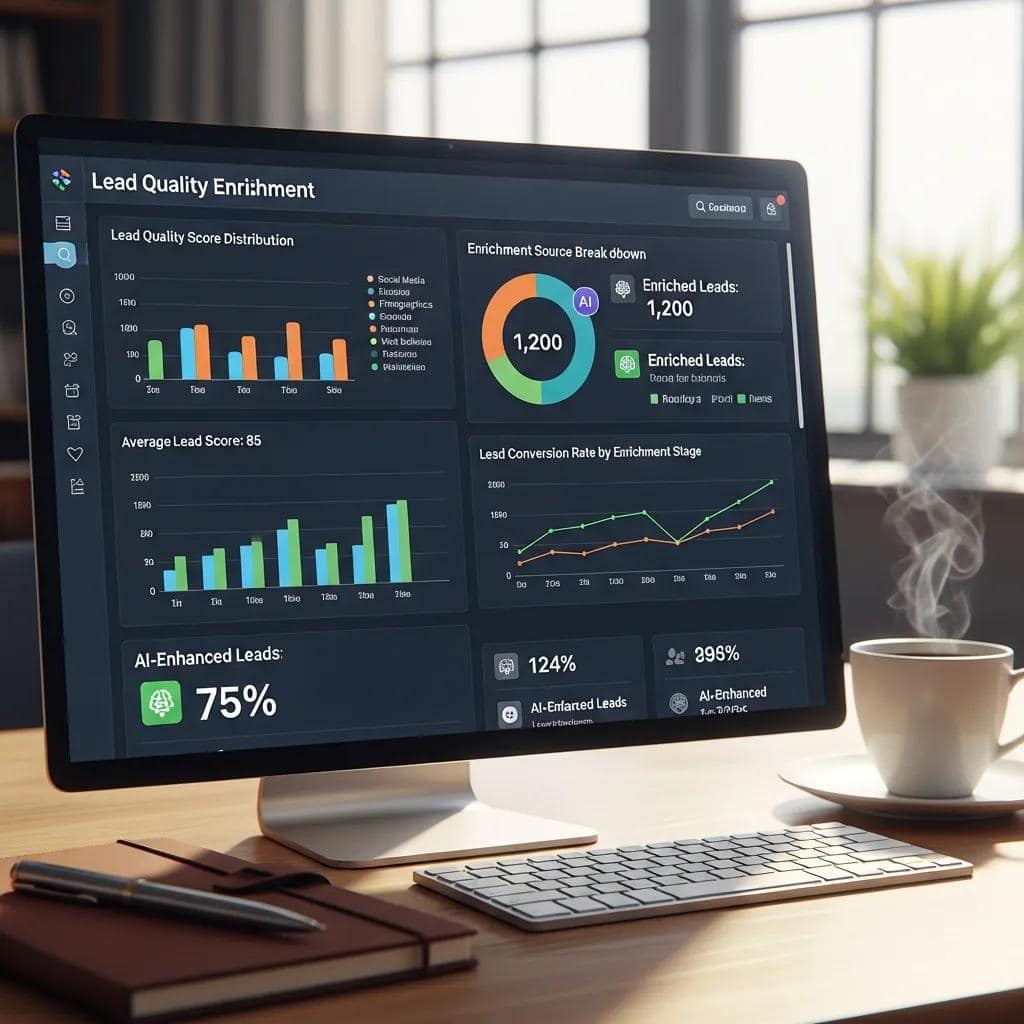
AI takes on the tedious parts of enrichment and delivers concrete benefits:
- Higher data accuracy: Models validate and reconcile records across sources, cutting down stale or incorrect entries.
- Faster research: Automated enrichment replaces manual lookups, freeing reps to sell.
- More relevant outreach: Richer profiles enable messages that resonate with each prospect’s stage and needs.
Inveo’s AI-first lead enrichment integrates with your revenue stack to deliver cleaner profiles and actionable signals — so outreach converts more often and takes less time.
Predictive Lead Scoring
Predictive lead scoring applies machine learning to rank leads by their likelihood to convert. By analyzing historical outcomes and multi-channel signals, predictive models surface high-value prospects so teams can prioritize conversations that matter.
Research contrasts traditional, experience-based scoring with data-driven predictive models, showing how modern approaches leverage statistical and ML techniques to increase accuracy.
Predictive Lead Scoring Models & Sales Performance
Lead scoring is typically split between traditional approaches (based on salesperson and marketer judgment) and predictive models (driven by data mining and machine learning). This review analyzes the literature on these models and their effects on sales outcomes.
The state of lead scoring models and their impact on sales performance, M Wu, 2024
How Predictive Lead Scoring Works
Predictive scoring models evaluate a variety of signals, such as:
- Demographics: Role, company size, and location indicate fit and potential value.
- Behavioral signals: Site visits, content downloads, and email engagement reveal intent and readiness.
- Historical sales outcomes: Patterns from past deals highlight traits that correlate with successful closes.
Benefits for Sales Teams
Predictive scoring delivers measurable advantages:
- Greater efficiency: Teams focus on leads with the strongest signals, reducing wasted effort.
- Improved conversion rates: Prioritizing likely buyers increases close rates and shortens cycles.
- Data-informed decisions: Scoring insights guide where to invest time and which plays to run.
Sales Automation
Sales automation eliminates routine work from the sales motion — from lead routing to follow-ups and reporting — so reps can concentrate on building relationships and closing deals. When done right, automation enforces consistency while preserving personalization.
Key Tools for Sales Automation
Core automation capabilities include:
- CRM platforms: A single source for contacts, activities, and deal stages across the funnel.
- Email automation: Automated sequences that trigger timely, personalized follow-ups.
- Sales analytics: Dashboards and reports that surface performance trends and bottlenecks.
Benefits of Automating Sales Processes

The upside of sales automation is tangible:
- Saved time: Automation removes manual admin so reps can spend more time selling.
- Consistent experience: Workflows ensure timely, repeatable touchpoints with prospects.
- Richer reporting: Automated capture produces the metrics teams need to improve performance.
Inveo’s sales automation integrates with existing stacks to streamline workflows and lift productivity across the funnel.
Academic and industry studies continue to show that AI-driven automation — especially combined with predictive insights — improves sales effectiveness and CRM ROI.
AI & Automation for Sales Efficiency
AI is reshaping sales by delivering predictive insights, automating customer interactions, improving lead management, and removing manual tasks — all of which raise sales performance and strengthen customer relationships.
The impact of AI and business process automation on sales efficiency and customer relationship management (CRM) performance, US Nwabekee, 2024
Industry Applications
AI and automation have practical uses across industries. In finance, predictive models surface credit risk and fraud. In retail, AI optimizes inventory and personalizes the shopping experience. These examples show how revenue operations benefit from targeted, industry-specific automation.
Examples of Industries Using AI
- Healthcare: Predictive analytics and patient data modeling improve outcomes and operational planning.
- E-commerce: Automation accelerates order processing and powers chatbots for scalable support.
- Manufacturing: Predictive maintenance reduces downtime and improves efficiency.
Case Studies and ROI Analysis
Case studies make benefits tangible. Organizations that adopt AI and automation commonly report measurable gains in efficiency, conversion rates, and revenue growth.
Overview of Case Studies
- Company A: Implemented predictive lead scoring and saw a 30% lift in conversions within six months.
- Company B: Used AI-driven enrichment to cut data entry time by 50%, freeing reps for higher-value work.
- Company C: Rolled out sales automation and increased sales productivity by 25%, translating into higher revenue.
Key Metrics
- Conversion improvement: Typical gains of 20–30% after adopting AI solutions.
- Time savings: Automation can reclaim up to half of sales teams’ administrative time.
- Revenue growth: Organizations often report 15–25% revenue uplift tied to AI and automation.
FAQs
What is lead enrichment?
Lead enrichment is the process of appending verified, contextual data to leads so outreach is more informed and effective.
How does AI improve sales automation?
AI enhances sales automation by handling routine tasks, surfacing predictive signals, and enabling more personalized, timely communications.
What are the benefits of predictive lead scoring?
Predictive scoring helps teams rank and prioritize leads by likelihood to convert, improving efficiency and conversion performance.
ZoomInfo and Data Intelligence in Revenue Operations
ZoomInfo is a leading data intelligence platform that enriches lead generation and segmentation with firmographics and contact-level signals. Adding ZoomInfo to your stack gives sales and marketing teams clearer visibility into target accounts and helps accelerate pipeline velocity.
Platforms like ZoomInfo also automate data flows into CRMs such as Salesforce and HubSpot, improving contact accuracy, reducing manual entry, and keeping records synchronized across systems.
Marketing Automation and CRM Integration
Marketing automation tools — including Marketo and HubSpot — coordinate email outreach, nurture flows, and campaign workflows. Paired with CRMs (Salesforce, Pipedrive), they create a single source of truth for customer interactions and engagement metrics.
AI augments marketing automation with predictive analytics and sentiment analysis, enabling more relevant campaigns that enhance customer experience and lift conversion rates.
Revenue Management and Financial Automation
Revenue teams gain efficiency by connecting AI-enabled revenue management with ERP and accounting systems. These integrations automate billing, invoice processing, contract management, and revenue recognition in line with standards like IFRS 15.
Intelligent automation shortens accounts receivable cycles, improves cash forecasting, and streamlines audits. RPA and intelligent document processing cut manual errors and speed the revenue cycle.
Advanced Technologies Driving Operational Efficiency
Emerging technologies — agentic AI, cloud computing, and computer vision — are changing process automation and document handling. NLP and machine learning extract meaning from unstructured data, accelerating onboarding, routing, and triage.
Tools such as UiPath and Zapier provide orchestration and integration across systems, enabling scalable workflows, clearer visibility, and lower operational complexity.
Data Governance, Compliance, and Security
Data quality and regulatory compliance are non-negotiable. Following standards like GDPR protects customer privacy and reduces legal exposure.
Robust governance, encryption, and audit trails secure sensitive data across CRM, marketing, and ERP systems — and help maintain customer trust and audit readiness.
Customer Experience and Intelligent Engagement
AI chatbots and conversational agents deliver fast, personalized support. Sentiment analysis and deep learning help these systems understand intent and context, improving the relevance of each interaction.
When these tools are tied into CRM and marketing stacks, they build a cohesive digital record that enables faster, more meaningful engagement and stronger loyalty.
Strategic Planning and Business Intelligence
Data aggregation and analytics power dashboards that support planning and strategic decisions. Forecasting models and predictive maintenance anticipate demand, optimize resource allocation, and reduce risk.
Advanced analytics, including hyperparameter tuning and ML modeling, help teams refine pricing, segmentation, and go-to-market tactics to maximize ROI and long-term growth.
Data Management and Workflow Automation
Accurate data is the foundation of efficient revenue workflows. Integrating enrichment tools with CRMs and marketing platforms automates cleansing, normalization, and synchronization so teams work from consistent, reliable records.
Workflow automation — via RPA and intelligent document processing — removes repetitive tasks like invoice handling and contract routing, reducing errors and freeing teams to focus on strategic work.
Pipeline Management and Lead Generation Tools
Effective pipeline management requires real-time visibility into lead progress, touchpoints, and engagement. AI-powered lead generation combines firmographics, behavior, and predictive scoring to surface high-potential prospects and prioritize outreach.
Platforms such as Salesforce, HubSpot, and Pipedrive automate scoring, nurture sequences, and forecasting to keep pipeline velocity steady and reduce conversion friction.
Financial Accounting and Revenue Recognition
Linking revenue management with ERP and accounting systems streamlines billing and revenue recognition, ensuring compliance with IFRS 15 and accurate financial reporting.
Subscription businesses benefit from specialized tooling that automates pricing updates, contract edits, and deferred revenue calculations, improving cash flow forecasting and ledger integrity.
Technology Infrastructure and Scalability
Scalable infrastructure, API connectivity, and cloud platforms enable rapid adoption of SaaS solutions critical for revenue operations. Agentic AI and ML models add capabilities like pattern recognition, NLP, and advanced forecasting.
Tools such as Microsoft Copilot, Claude, UiPath, and Zapier help orchestrate data and tasks across marketing, sales, finance, and support systems, improving visibility and responsiveness.
Customer Data Privacy and Regulatory Compliance
With growing regulation — for example, GDPR — prioritizing data privacy and compliance is essential. Implementing governance, encryption, and audit trails ensures responsible handling of customer data across systems.
Compliance reduces legal exposure and builds trust, enabling sustainable growth and stronger customer relationships.
Personalization and Customer Experience Enhancement
AI-driven personalization delivers the right content, offers, and messaging at each touchpoint. Email programs, chatbots, and conversational agents use sentiment and context to improve engagement and relevance.
When these capabilities are connected to CRM and marketing platforms, businesses can nurture relationships at scale and increase customer satisfaction and retention.
Business Process Management and Intelligent Automation
BPM combined with intelligent automation — RPA and intelligent document processing — transforms onboarding, triage, and order management. These solutions reduce cycle times and increase accuracy.
Computer vision and agentic AI help organizations extract value from unstructured data, optimize resource allocation, and make faster, better decisions that lower costs and boost performance.
Data Integration and Transformation
Seamless integration between systems like Salesforce, HubSpot, and Pipedrive is vital for a single, trusted view of customers. Data transformation routines clean, normalize, and enrich records so analytics and automation run on solid ground.
Robust aggregation and modeling enable predictive analytics, risk assessment, and strategic planning that empower revenue teams to act with confidence.
Subscription Business Models and Revenue Cycle Management
Subscription companies rely on revenue management software to automate billing, invoice processing, and IFRS 15-compliant revenue recognition. These systems handle complex pricing, contract changes, and deferred revenue calculations.
ERP and accounting integrations streamline accounts receivable, cash forecasting, and ledger updates, accelerating the revenue cycle and improving reporting accuracy.
Scalability and Cloud Computing in Revenue Operations
Cloud platforms deliver the scalability needed to deploy SaaS tools quickly and cost-effectively. Agentic AI and cloud-hosted ML models bring advanced forecasting and pattern detection to revenue workflows.
These technologies speed processes, improve accuracy, and help teams respond to market shifts with greater agility and confidence.
Robotic Process Automation and Document Processing
RPA automates recurring tasks such as invoices, order fulfillment, and contract processing. Intelligent document processing uses computer vision and NLP to extract data from documents, cutting manual effort and reducing errors.
Paired with CRM and ERP integrations, these tools streamline operations, lower costs, and free revenue teams to focus on strategy and growth.
Risk Management and Regulatory Compliance
AI-driven predictive analytics surface fraud, credit risk, and compliance gaps before they escalate. Data governance frameworks and automated audit trails help organizations meet regulations like GDPR and maintain data quality.
Encryption, compliance reporting, and automated controls reduce exposure and build stakeholder confidence, supporting sustainable expansion.
Enhancing Marketing Strategy with AI and Data Analytics
AI-enabled analytics and hyperparameter tuning help marketing teams sharpen targeting, pricing, and campaign effectiveness. By analyzing behavior, trends, and demand signals, teams can run personalized programs that drive higher engagement and conversion.
Connecting platforms like Marketo to CRM systems enables coordinated outreach, backed by predictive analytics and sentiment analysis for better results and higher marketing ROI.
Financial Services and Insurance Industry Applications
Financial services and insurance firms use AI for fraud detection, risk scoring, and automated customer service. Revenue management integrations support complex billing and compliance needs.
RPA accelerates claims handling, invoicing, and regulatory reporting — improving operational efficiency and customer satisfaction while controlling costs.
Future Trends: Agentic AI and Prompt Engineering
Agentic AI and prompt engineering are advancing rapidly and will reshape revenue operations by enabling more autonomous decision-making and tighter human–machine collaboration. These innovations leverage large language models and deep learning to surface insights, automate planning, and scale strategic tasks.
Organizations that adopt these capabilities can expect faster responses, higher accuracy, and greater operational agility — advantages that support long-term revenue growth in dynamic markets.
Frequently Asked Questions
What role does AI play in customer experience enhancement?
AI improves customer experience by personalizing interactions and delivering timely support. Tools like chatbots and sentiment analysis interpret intent and context, enabling more relevant, engaging responses. Integrated with CRM and marketing platforms, AI helps businesses nurture relationships at scale so customers feel understood throughout their journey.
How can businesses ensure data privacy and compliance with AI tools?
To protect data and stay compliant with AI, businesses should adopt strong governance frameworks that include encryption, audit logs, and adherence to regulations like GDPR. Regular audits, employee training on data handling, and clear policies for data use are essential. Prioritizing these controls builds customer trust and reduces legal risk.
What are the key challenges in implementing AI and automation in sales?
Common challenges include change resistance, integration gaps with legacy systems, and the need for high-quality data. Choosing tools that fit your workflows and ensuring models are trained on relevant data are critical. Success requires a structured roll-out: clear communication, training, and ongoing support to embed new processes.
How does predictive lead scoring differ from traditional lead scoring?
Predictive lead scoring relies on data and machine learning rather than subjective judgment. Instead of depending mainly on salesperson intuition, predictive models analyze historical patterns to identify traits tied to successful conversions. This approach helps teams prioritize leads more accurately, improving conversion rates and resource allocation.
What industries benefit most from AI-driven sales automation?
AI-driven sales automation helps many sectors, including finance, healthcare, retail, and manufacturing. Finance uses it for risk assessment and fraud detection; healthcare improves patient data workflows; retail personalizes shopping experiences; manufacturing leverages predictive maintenance to cut downtime. Each industry can streamline processes, enhance interactions, and drive revenue with AI.
What metrics should businesses track to measure the success of AI and automation initiatives?
Track metrics like conversion rates, sales productivity, and time saved to evaluate AI and automation impact. Measure changes in lead conversion after implementation, reductions in administrative time, and improvements in customer satisfaction. Revenue growth and CRM ROI are also key indicators of success.
Conclusion
Applying AI and automation helps revenue teams work smarter: improving lead quality, boosting efficiency, and delivering measurable growth. By combining intelligent lead enrichment, predictive scoring, and streamlined sales processes, organizations can unlock better outcomes and a competitive edge. Embrace these technologies to modernize your sales strategy and maximize revenue. Discover how our solutions can strengthen your revenue operations today.