

The B2B Sales Enablement Playbook: Essential Strategies, Tools, and Processes for Your Revenue Team
In the competitive landscape of B2B sales, effective sales enablement is crucial for driving revenue and enhancing team performance. This playbook serves as a comprehensive guide, detailing essential strategies, tools, and processes that revenue teams need to succeed. Readers will learn about the best sales enablement strategies, the tools that optimize workflows, and how to measure success effectively. Many organizations struggle with aligning their sales and marketing efforts, leading to missed opportunities and inefficiencies. This playbook offers actionable insights and solutions to bridge these gaps. The article will cover key sales enablement strategies, tools, metrics for success, and industry-specific applications, providing a roadmap for revenue teams to enhance their performance.
The academic perspective further underscores the growing significance of sales enablement, detailing its evolution and future trajectory in B2B management.
Sales Enablement Evolution: Strategies & Future Trends
Sales enablement has emerged as a critical area in sales and B2B management, yet its academic literature remains fragmented and dispersed. This study examines a bibliometric analysis of 232 peer-reviewed articles indexed in Scopus to enhance existing knowledge and chart future directions. The findings show that research has expanded rapidly since 2015, moving from early emphases on solution selling and salesforce management to more recent focus on value-based selling, social media engagement, and customer-centric approaches. Thematic analysis highlights three dominant streams – value creation, social and platform-based engagement, and brand/content strategies – while also revealing emerging but underexplored areas such as artificial intelligence, customer experience, and SMEs.
Reimagining sales success: the emerging science of sales enablement, SS Parihar, 2026
What Are the Best Sales Enablement Strategies for B2B Revenue Teams?
Sales enablement strategies are designed to equip sales teams with the resources, knowledge, and tools necessary to engage effectively with prospects and close deals. These strategies focus on aligning sales and marketing efforts, ensuring that sales teams have access to relevant content and training. The primary benefit of implementing robust sales enablement strategies is the improvement in sales performance and customer engagement, leading to increased revenue.
How Does Content Management Enhance Sales Enablement Strategy?
Content management plays a pivotal role in sales enablement by organizing and delivering the right content to sales teams at the right time. Effective content management systems (CMS) allow sales teams to access up-to-date materials, such as case studies, product information, and sales scripts, which are essential for engaging prospects. Tools like “HubSpot” and Salesforce provide integrated content management solutions that streamline this process, ensuring that sales representatives can focus on selling rather than searching for information.
Which Processes Improve Sales Team Performance and Onboarding?
Streamlined onboarding processes are critical for enhancing sales team performance. Effective onboarding includes comprehensive training programs that cover product knowledge, sales techniques, and company culture. Additionally, implementing performance metrics helps track progress and identify areas for improvement. Best practices include regular feedback sessions, role-playing exercises, and the use of sales coaching platforms to reinforce learning and boost confidence among new hires.
Which Sales Enablement Tools Optimize B2B Sales Workflows?
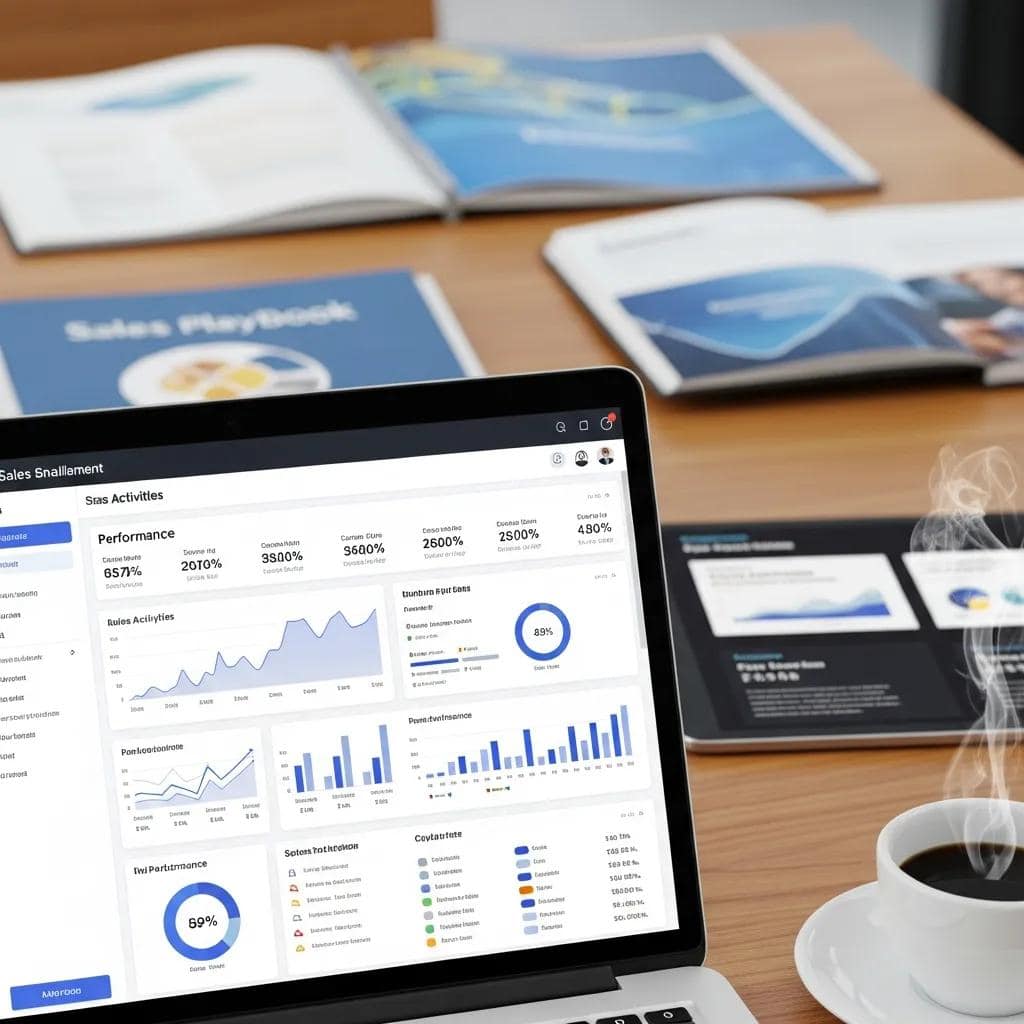
Sales enablement tools are essential for optimizing B2B sales workflows by automating repetitive tasks, providing analytics, and facilitating communication. These tools enhance productivity and allow sales teams to focus on high-value activities. Key features to look for in sales enablement tools include integration with CRM systems, content management capabilities, and analytics dashboards that provide insights into sales performance.
Indeed, the transformative power of digital tools and automation is a cornerstone of modern sales enablement, fundamentally reshaping how sales teams operate.
Digital Tools & Automation for Sales Enablement
The adoption of digital tools has revolutionized sales efficiency by automating repetitive tasks, improving communication, and providing real-time insights into customer behavior. This transformation is not merely about implementing new software; it represents a fundamental shift in how sales teams operate, interact with customers, and manage their pipelines. This paper aims to bridge the gap between the current research on sales enablement and the adoption of technology in sales.
The digital transformation of sales: Examining the role of technology adoption in sales enablement, 2025
These tools not only improve efficiency but also enhance collaboration between sales and marketing teams, ensuring that everyone is aligned towards common goals.
What Features Should Industrial Sales Enablement Tools Include?
Industrial sales enablement tools should include features tailored to the unique needs of the sector. Essential features include:
- Customizable Dashboards: Allow sales teams to track key performance indicators relevant to their specific industry.
- Integration with Industry-Specific CRMs: Ensure seamless data flow and communication between sales and marketing.
- Mobile Accessibility: Enable sales representatives to access critical information on-the-go, enhancing responsiveness to client needs.
These features are vital for addressing the complexities of industrial sales processes and improving overall team effectiveness.
How Do Sales Enablement Platforms Integrate with CRM Systems?
Integrating sales enablement platforms with CRM systems is crucial for maximizing the effectiveness of both tools. This integration allows for seamless data sharing, ensuring that sales teams have access to the most current customer information and sales materials. Benefits of this integration include improved lead tracking, enhanced reporting capabilities, and a unified view of customer interactions. Platforms like “Salesforce” and HubSpot offer robust integration options that facilitate this process, enabling sales teams to work more efficiently.
This integration is further validated by research highlighting the strategic importance of CRM systems in cultivating long-term B2B relationships and driving sustained revenue growth.
CRM for B2B Sales: Driving Revenue & Performance
Business-to-business (B2B) sales environments demand long-term relationship cultivation over transactional interactions. This paper investigates the critical role of Customer Relationship Management (CRM) systems and relationship building strategies in shaping sales performance in B2B markets. Drawing from empirical studies and industry examples, the research explores how trust, commitment, and technology integration through CRM tools contribute to sustained revenue growth, client retention, and sales force productivity. The findings highlight CRM’s role as a strategic enabler, not just a data repository.
Strategic B2B Relationship Management: Impact ofCRM Systems on Long-Term Sales Performance, 2025
How Can Revenue Teams Measure Sales Enablement Success?

Measuring the success of sales enablement initiatives is essential for understanding their impact on revenue generation. Key metrics to consider include win rates, sales cycle length, and overall revenue growth. By tracking these metrics, revenue teams can assess the effectiveness of their sales enablement strategies and make data-driven decisions to optimize performance.
What Metrics Demonstrate Improved Win Rates and Revenue Growth?
To demonstrate improved win rates and revenue growth, revenue teams should focus on the following metrics:
- Win Rate: The percentage of deals closed compared to the total number of opportunities.
- Sales Cycle Length: The average time taken to close a deal, which can indicate the efficiency of the sales process.
- Revenue Growth: The increase in revenue over a specific period, reflecting the overall effectiveness of sales strategies.
These metrics provide valuable insights into the performance of sales enablement efforts and highlight areas for improvement.
How Do Sales Analytics Support Continuous Performance Improvement?
Sales analytics play a critical role in supporting continuous performance improvement by providing actionable insights into sales activities. By analyzing data from various sources, sales teams can identify trends, understand customer behavior, and refine their strategies accordingly. Tools like Tableau and Microsoft Power BI offer advanced analytics capabilities that help sales teams visualize data and make informed decisions to enhance their performance.
What Are Industry-Specific Sales Enablement Applications in Automation and Building Management?
Sales enablement applications can vary significantly across different industries, particularly in automation and building management. These applications must address the unique challenges faced by sales teams in these sectors, such as complex product offerings and lengthy sales cycles.
How Do Sales Enablement Solutions Address Automation Sector Challenges?
In the automation sector, sales enablement solutions help address challenges such as technical complexity and the need for specialized knowledge. By providing comprehensive training resources and technical documentation, sales teams can better understand the products they are selling. Additionally, tools that facilitate collaboration between sales and engineering teams can enhance the sales process by ensuring that sales representatives have access to the latest product information and specifications.
What Case Studies Illustrate Success in Building Management Sales?
Successful case studies in building management sales often highlight the effectiveness of tailored sales enablement strategies. For instance, a leading building management company implemented a new sales enablement platform that integrated with their existing CRM. This integration allowed for better tracking of customer interactions and streamlined communication between sales and support teams. As a result, the company saw a significant increase in customer satisfaction and a 20% improvement in sales performance within the first year.